News

Global wellness economy hits record $7.5 trillion

The Global Wellness Institute’s Global Wellness Economy Monitor 2026 forecasts the market will be worth $11 trillion by 2030

Global

By Wendy Golledge

11 November 2026

globalwellnessinstitute.org/
Advertisement

With the release of the latest Global Wellness Economy Monitor, the Global Wellness Institute (GWI) revealed the industry has reached a new peak.

The report states that the global wellness economy is now worth $7.5 trillion (£5.58 trillion/€6.71 trillion), having grown by 8.9 per cent in 2025.

Worldwide, spending on wellness is now 49 per cent higher than in 2019 and double its 2013 level, when the GWI first measured it.

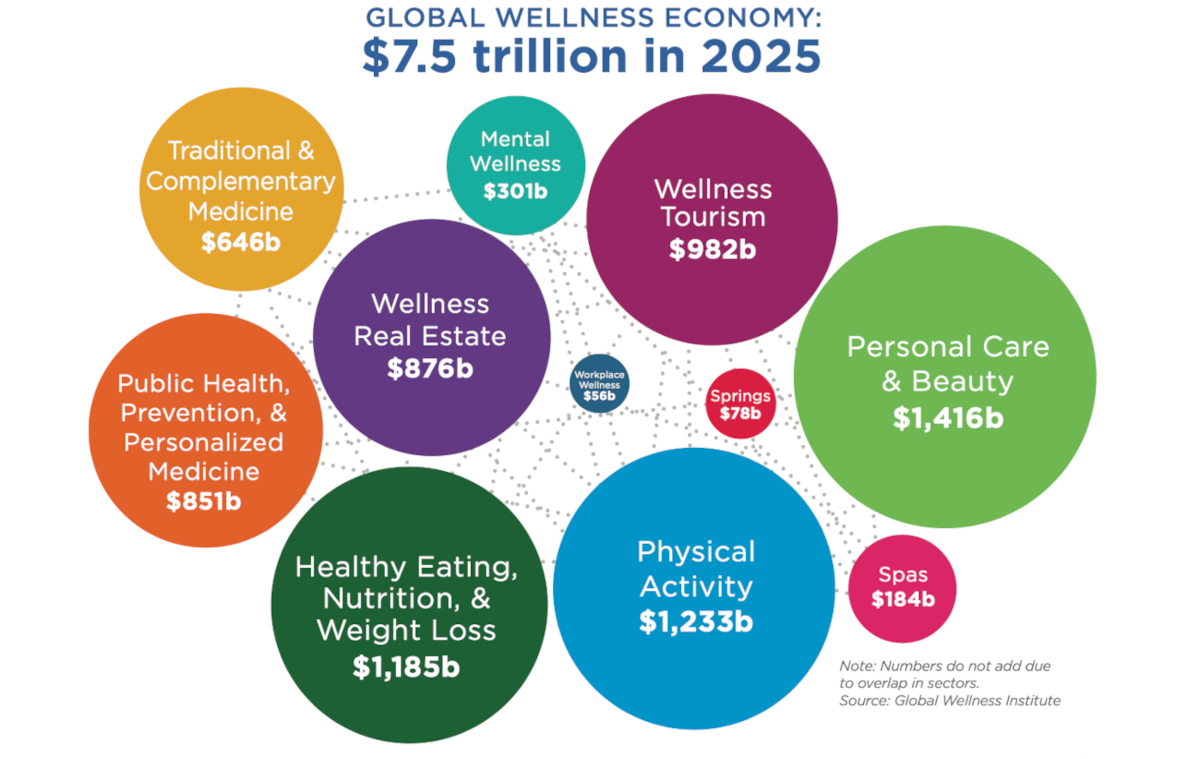
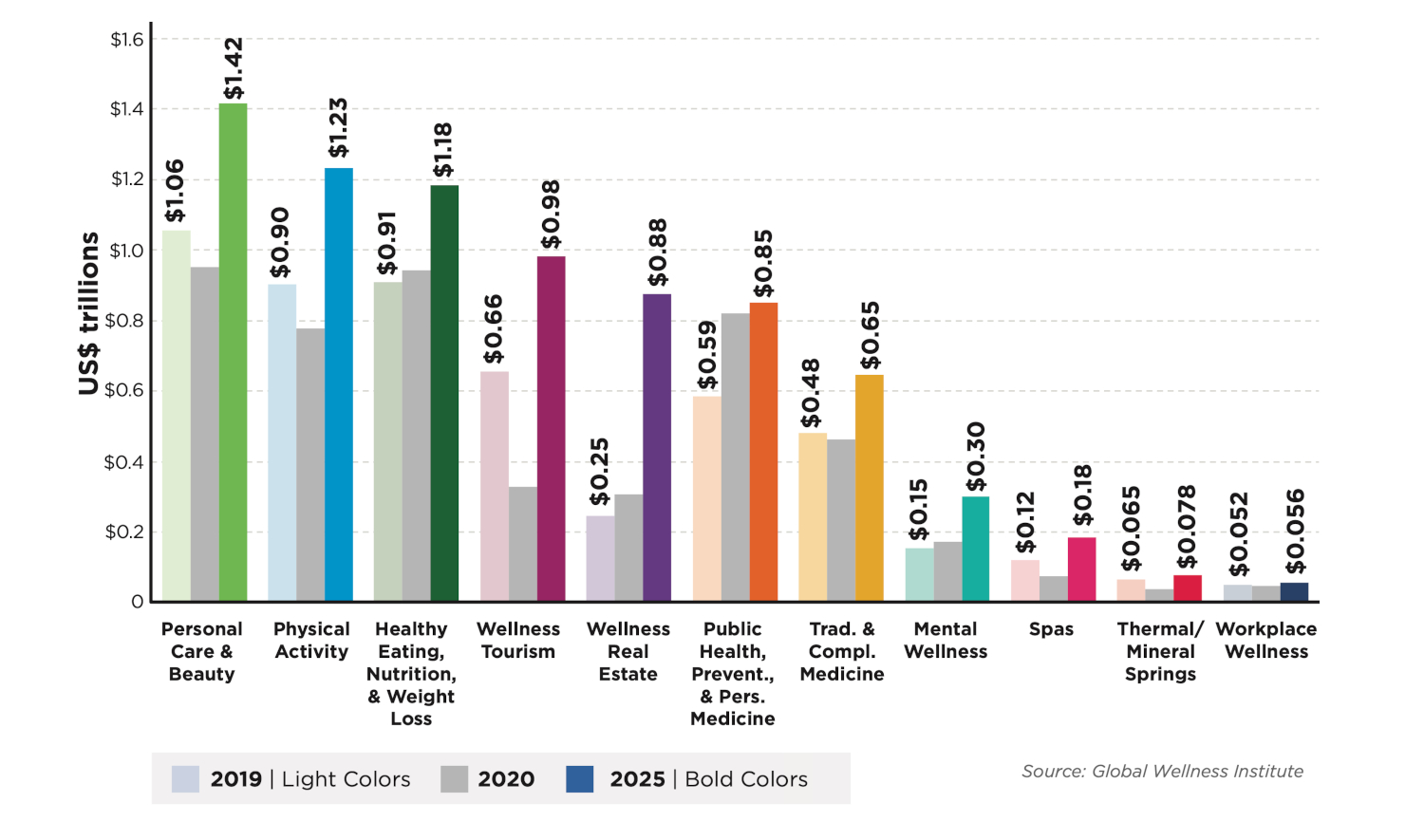
Three wellness sectors – personal care and beauty, physical activity, nutrition and weight loss – are currently worth more than $1 trillion. By 2030, the GWI predicts seven will be.

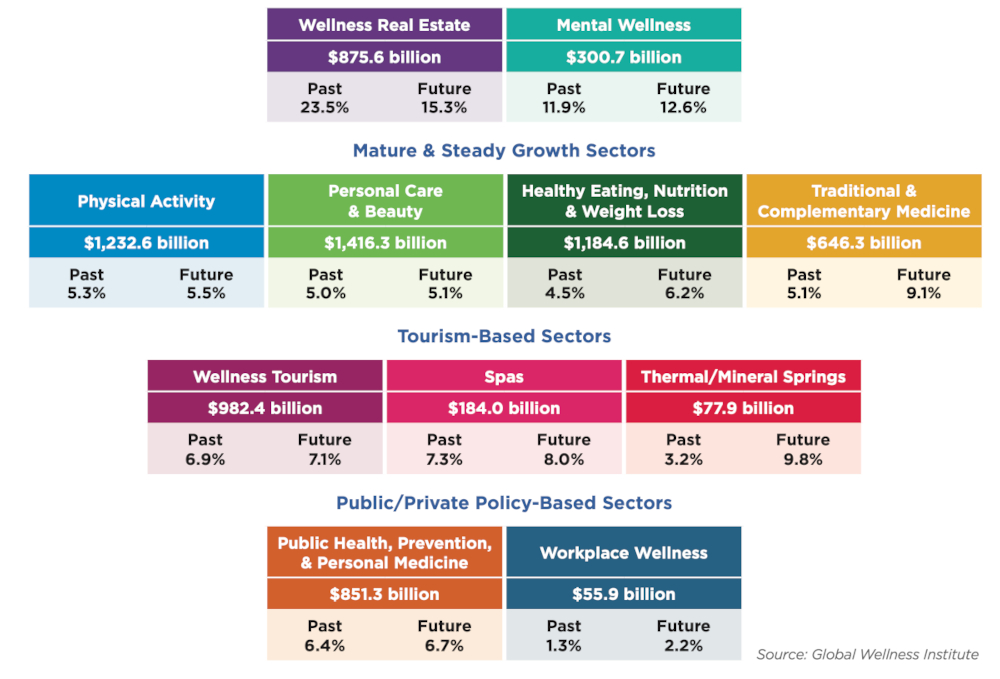
Wellness economy sectors in 2025 – past and future annual growth rates. Source: GWI

‘Peak’ wellness

Released on 11 November the GWI’s Global Wellness Economy Monitor 2026 is the Institute’s most in-depth report to date.

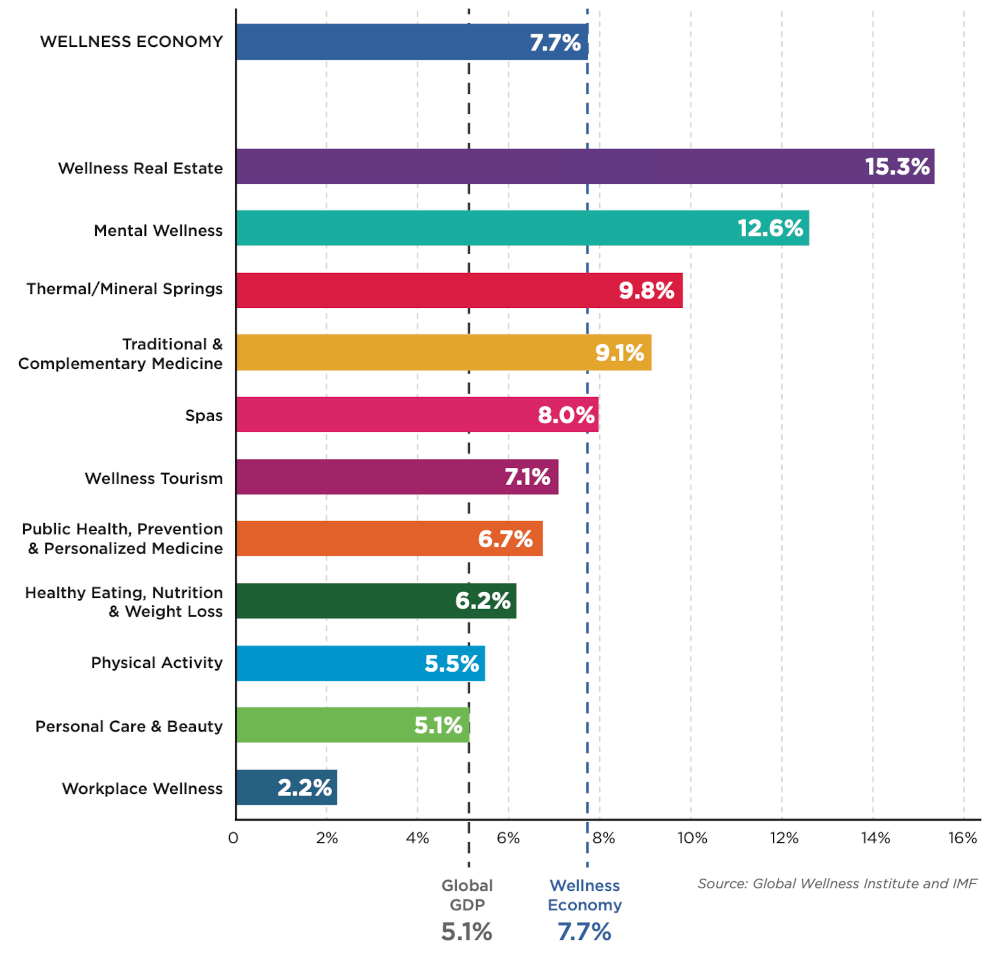
It reveals the wellness economy is on track to reach a value of $8.2 trillion by the end of 2026 and $10.9 trillion by 2030. This growth, at 7.7 per cent a year, is 50 per cent faster than global GDP.

The GWI states wellness now represents 6.36 per cent of global GDP, up from 4.3 per cent in 2013, and is expected to reach 7.21 per cent by 2030.

It is nearly four times the size of the global pharmaceutical industry and 61 per cent as large as all global health expenditure.

“While it may seem like we’ve reached ‘peak wellness’, the reality is that the wellness economy will continue to explode over the next five years, because this growth is not simply a consumer trend.”

Katherine Johnston

Senior research fellow, GWI.

“Powerful structural forces across every region of the world will accelerate demand in the coming years: rapidly ageing populations; over-burdened healthcare systems; and rising rates of chronic disease, stress and mental health challenges,” adds Johnston.

“These pressures make prevention, healthspan and healthy living environments more critical than ever.

“While the tourism-based sectors – wellness tourism, spas and thermal/mineral springs – may have taken the longest to recover from the pandemic, now they are storming back. They were three of the fastest growing markets from 2024 to 2025.”

Wellness economy market size by sector – 2019, 2020 and 2025

Europe leads regional growth

North America ($2.5 trillion), Asia-Pacific ($2.3 trillion) and Europe ($2.0 trillion) remain the largest regional wellness economies, together accounting for nearly 90 per cent of the global market.

Every region has grown strongly since 2019, but Europe posted the biggest gain in 2025, followed by Middle East-North Africa and Asia-Pacific.

GWI cites Europe’s wellness tourism market as worth $291.8 billion. It remains the world’s largest spa market, with revenues of $69.1 billion across 74,563 spas.

Italy, the UK, Spain, Austria and Switzerland all feature in the top 15, with Spain (14.2 per cent) and Italy (13.5 per cent) showing strongest growth in 2025.

The spa sector: fast facts

*In 2025 spas (12.8 per cent), wellness tourism (11.4 per cent) and thermal/mineral springs (10.4 per cent) were three of the five fastest-growing wellness markets.


*An estimated 221,094 spas generated $184.0 billion in revenues in 2025.


*The GWI forecasts spa revenues will grow by 8.0 per cent a year to $270.1 billion by 2030.


*Hotel and resort spas are now both the largest growing spa category both by revenues ($92.0 billion) and number (95,382). They are also the fastest growing, at 10.5 per cent a year since 2019.


*Medical spas follow at 7.2 per cent annual growth, while day, club and salon spas have grown more slowly, at 3.4 per cent.

Wellness tourism and social bathing

Wellness tourism grew by 11.4 per cent to $982.4 billion, with every region in the world reaching new records for both wellness tourism revenues and trips.

Thermal/mineral springs earned $77.9 billion and are forecast to grow by 9.8 per cent a year as the social bathing boom continues.

Europe’s long-established thermal traditions are being reshaped by modern interest in preventive health, with operators renovating older bathhouses and repositioning them to appeal to younger travellers.

Investment is strong: around 1,850 new springs establishments have opened since 2020 and over 250 projects are in the pipeline.

Projected average annual growth rate by sector, 2025-2030

Real estate and mental wellness lead growth

Wellness real estate remains the standout sector, says the report. At $875.6 billion, it is now 3.5 times its 2019 size and forecast to become the second-largest wellness sector by 2030.

“In Europe, wellness real estate has grown nearly five times faster than overall construction,” says Johnston. “The UK has climbed from fifth to third largest market in the world since 2019.”

Mental wellness ($300.7 billion) has nearly doubled since 2019 and is forecast to grow by 12.6 per cent a year. Meditation and mindfulness and sleep are among its fastest-growing segments.

Traditional and complementary medicine follows at 9.1 per cent, boosted by longevity and biohacking modalities from infrared light therapy to cryotherapy.

Workplace wellness, at 1.3 per cent annual growth, is the only stagnant sector.

Wellness economy size and growth projections – 2013-2030

2013: $3.4 trillion


2019: $5 trillion


2023: $6.4 trillion


2024: $6.9 trillion


2025: $7.5 trillion


Projected 2030: $10.9 trillion

A growing economic force

To put the size of the wellness economy in perspective, it represented 4.3 per cent of GDP in 2013 and 6.36 per cent in 2025. GWI estimates it will make up 7.21 per cent by 2030.

The wellness economy is now larger than the green economy, IT, tourism, entertainment and sport, and nearly four times the size of the global pharmaceutical industry.

The Global Wellness Economy Monitor 2026 can be downloaded in full from the Global Wellness Institute here.

It contains in-depth sub-sector data, such as how mindful movement (now worth $56 billion) has been the fastest-growing segment within physical activity, fuelled by the Pilates craze, and how the boom in longevity has pushed the personalised medicine market up by 7.7 per cent in the last year.

It was prepared by Katherine Johnston, Joanne Hopkins, Tonia Callender and Beth McGroarty, based on primary and secondary research conducted from January to September 2026.

Be inspired...

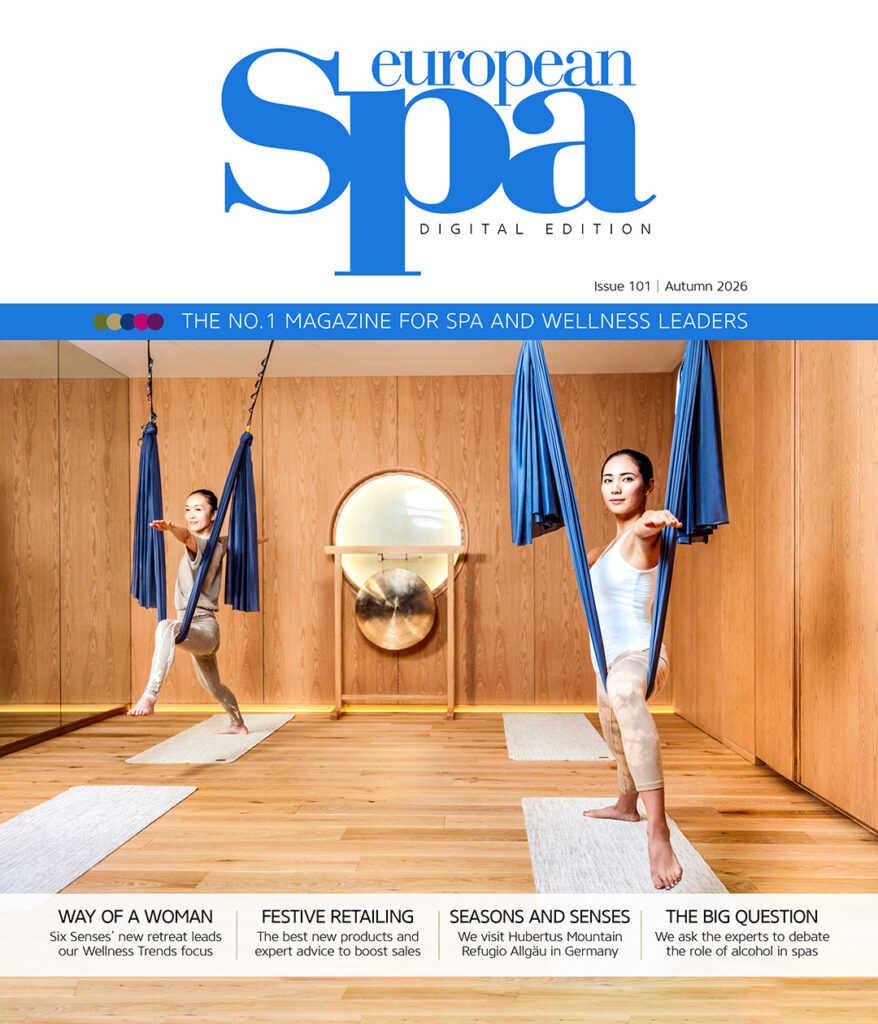
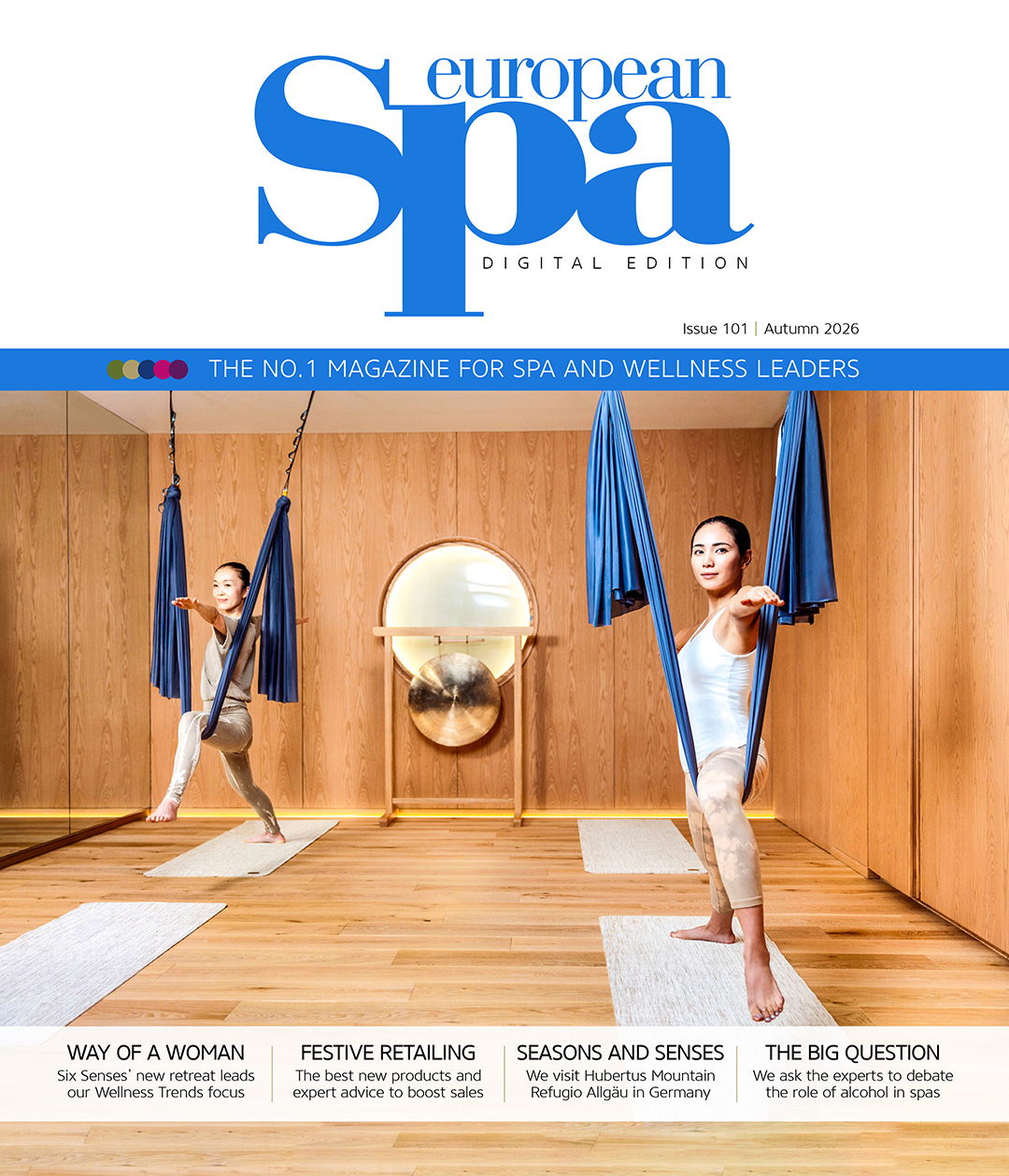
Don’t miss the autumn issue of European Spa, out now. Read it for free using the link below…

europeanspamagazine.com
Advertisement
Advertisement

Sign up to our digital edition

Sign Up Now

European Spa Magazine is published by Spa Publishing Ltd    |    Company registration number: 6293825

About    |    Contact Us    |    Privacy Policy    |    Terms & conditions    |    Disclaimer

© Copyright 2026 - Spa Publishing Limited. All rights reserved.